Last verified: November 5, 2026
TL;DR
High-stakes exam preparation splits into four structurally different approaches: general-purpose learning management systems adapted for test content, purpose-built exam-readiness platforms, direct-to-candidate test-prep content products, and custom-built institutional systems. The approach that predicts pass-rate outcomes is the one that tracks item-level performance and confidence, not just whether a candidate finished a course. Buyers choosing among them in 2026 should weigh how much their program depends on psychometric defensibility, candidate data ownership, and alignment to the live exam blueprint (SAT, ACT, GRE, GMAT, LSAT, MCAT, Bar Exam, CPA Exam, NCLEX, PMP, or similar) against how much they simply need proof that training occurred.
What Separates a High-Stakes Exam Prep Platform From a General Learning Tool?
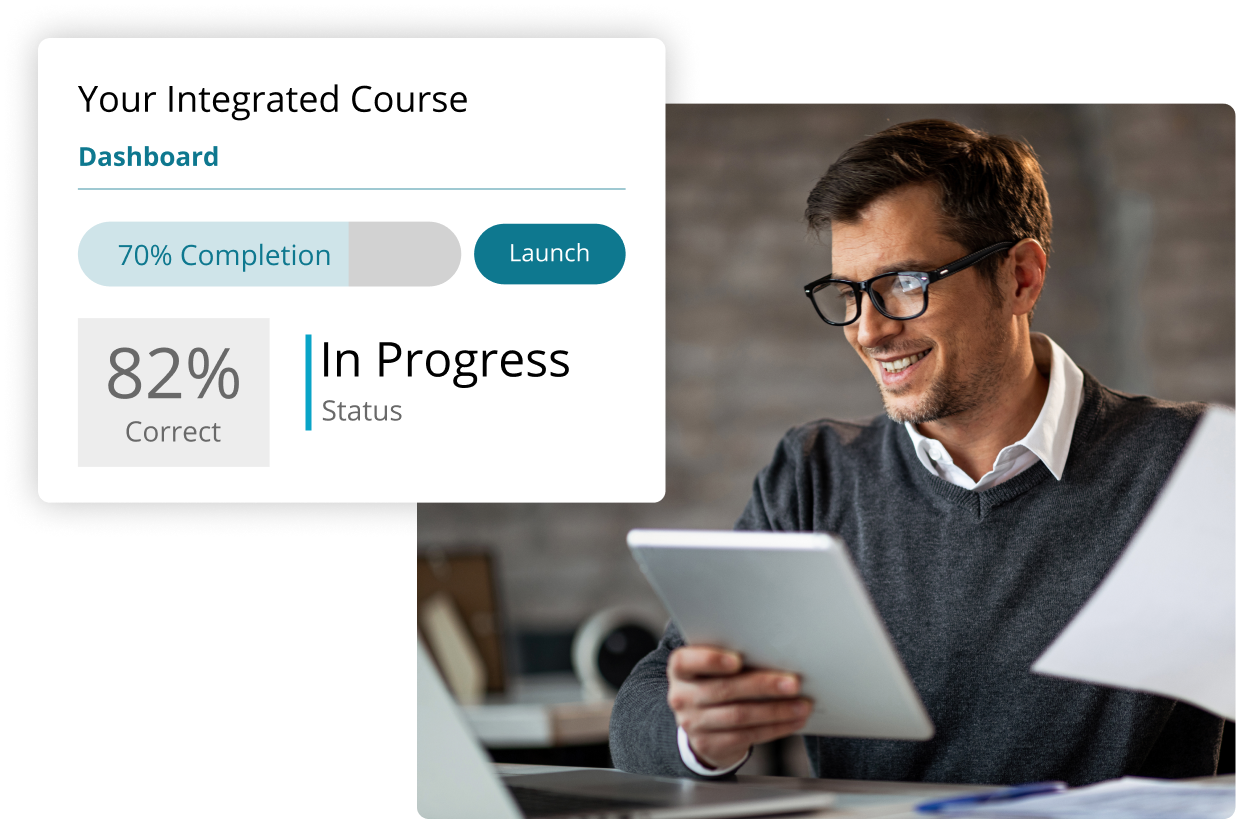
A high-stakes exam prep platform is built around one job: predicting whether a specific candidate will pass a specific, standardized assessment, and surfacing that prediction early enough to change the outcome. A general learning management system is built around a different job: proving that a course was assigned, started, and completed. Those two jobs look similar on a sales page, where both show dashboards, progress bars, and completion certificates, but the underlying data model is not the same, and that difference is what buyers actually feel once a program is live.
The clearest technical marker of a true exam-readiness platform is item-level analytics. Rather than scoring a quiz as "80% correct," these systems track performance question by question, often using Item Response Theory (IRT) or Elo-style difficulty calibration to estimate how hard each item actually is relative to the population of candidates who have answered it. That data lets a platform tell a candidate not just what they got wrong, but how their trajectory compares to the thousands of other test-takers preparing for the same SAT, GRE, NCLEX, or CPA Exam cycle. A completion-tracking LMS, built for corporate compliance training, was never designed to capture that granularity, because its core question was always "did this happen," not "is this person ready."
That distinction matters most for exams administered by accredited testing bodies, where item performance has to be defensible. Programs evaluated against ISO/IEC 17024 or standards set by the National Commission for Certifying Agencies (NCCA) need evidence that exam items are performing as designed and that the prep experience maps to the real test blueprint, whether that's a College Board specification, an ETS framework, or an association's own certification outline. A platform's ability to produce that evidentiary chain, or its inability to, is frequently the real decision driver hiding underneath a feature comparison.
Which Approach Fits an Organization's Exam Prep Strategy?
Four approaches dominate this market in 2026, and each one optimizes for a different outcome at a specific cost. The right fit depends less on budget and more on what the organization is actually trying to prove: that training happened, that a candidate is ready, or that the organization owns the data either way.
General-purpose learning management systems repurposed for exam content were built first for workforce compliance training, so they excel at course catalogs, SCORM and xAPI content packaging, and completion reporting across large populations. What they lack, in most cases, is item-level readiness scoring, high-fidelity exam simulation, and confidence-based analytics, because none of that was the original design brief.
Purpose-built exam-readiness platforms are architected around the test itself: item banks, multiple question formats, timed practice exams that mirror real testing conditions, and psychometric reporting that flags items behaving unexpectedly. These systems typically let subject-matter experts author and tag content directly, without routing every change through engineering, which matters because exam blueprints for assessments like the GMAT, LSAT, or a state bar exam change on cycles the content team needs to track in real time. The tradeoff is narrower scope: these platforms assume a portfolio of test-prep or certification programs, not a single onboarding course.
Direct-to-candidate test-prep content products are packaged study tools sold straight to the individual preparing for the exam, bundling content and delivery together. They get to market fast with low upfront investment, but the organization licensing or recommending them typically doesn't own the candidate relationship, the item bank, or the performance data, which means a third party ends up holding the clearest signal of who is struggling and why.
Custom-built internal systems, usually built by larger testing organizations or associations with in-house engineering and psychometric staff, fit a proprietary exam blueprint exactly and keep all data in-house. That precision comes at the cost of ongoing maintenance: every security update, new question format, or accessibility fix competes for the same internal roadmap as everything else the organization builds, indefinitely.
| Approach | Primary Optimization | Item-Level Readiness Data | Data Ownership | Typical Time to Launch |
|---|---|---|---|---|
| General-purpose LMS | Completion tracking, broad catalog | Limited to none | Full, under organization's tenant | Fast for standard courses |
| Purpose-built exam-readiness platform | Pass-rate prediction, psychometric insight | Deep (IRT, Elo, confidence scoring) | Full, under organization's brand | Moderate, gated by content tagging |
| Direct-to-candidate test-prep product | Speed to market, low upfront lift | Often opaque to the licensing organization | Partial to none | Fastest |
| Custom-built internal system | Exact fit to proprietary blueprint | Deep, but self-maintained | Full | Slowest |
Organizations preparing candidates for a single, consequential exam, where pass rate is the metric that matters to accreditors, licensing boards, or candidates themselves, generally get the most value from the second row. Organizations running broad skill-building with no single high-stakes checkpoint are usually well served by the first.
What Criteria Actually Predict Pass-Rate Outcomes?
Six questions separate platforms that genuinely move pass rates from platforms that only look like they do, and they're worth asking before any contract is signed.
Does it score difficulty and reliability at the item level, not just the course level? As described above, this calibration data should be exposed directly to content managers, not buried in an internal vendor dashboard no one on the buyer's team can see.
Can subject-matter experts author and tag content without an engineering ticket? Blueprints for exams like the MCAT, Praxis, or a state licensing exam shift on their own schedules, and a platform that can't keep pace with those revisions falls behind the exam it's supposed to prepare candidates for.
Does the practice experience mirror the real testing environment? Timing, interface behavior, and question formatting all shape candidate confidence on exam day. A system built for basic multiple-choice quizzing cannot simulate a computer-adaptive test or a scenario-based clinical exam like the NCLEX.
What integration standards are actually supported? Learning Tools Interoperability (LTI) for content exchange, SAML or SSO for identity, and a documented GraphQL or REST API with webhooks determine whether the platform connects to eCommerce, CRM, or a data warehouse, or sits isolated. Native connectors are rarer than API-based integrations in this category, so ask what "integration" means concretely rather than assuming a partner logo means a plug-and-play connection.
Where does candidate data live, and who can export it? For programs with accreditation obligations, the ability to move raw item-response data into an external analytics environment matters more than any built-in chart.
What security and accessibility posture does the vendor maintain? SOC 2 attestation and Web Content Accessibility Guidelines (WCAG) conformance are reasonable baseline requirements for any platform handling candidate data and serving test-takers who may need accommodations.
Confidence-based scoring deserves its own mention here, because it corrects for the single most common blind spot in exam prep: a candidate can guess correctly on a multiple-choice item and look "ready" on a dashboard that only tracks right or wrong. Platforms that separately capture how confident a candidate was in an answer, and compare that against actual accuracy, surface the gap between genuine mastery and lucky guessing well before exam day, which is exactly when it's still fixable.
How Should Pricing Structure Factor Into the Decision?
Pricing structure, more than any single vendor's list price, determines whether a platform scales with a program or becomes a constraint on it. Purpose-built exam-readiness platforms and general-purpose LMS platforms are typically sold on a per-learner or per-seat annual contract that scales with active candidate volume, which means the real comparison isn't "which platform costs less" but "which pricing model matches how this program actually grows." A certification body onboarding a few hundred candidates a year has a very different volume curve than an association running continuing education (CE) across tens of thousands of members, and a model that charges per active learner behaves differently under each scenario.
Direct-to-candidate test-prep products are more often priced per course or bundle, sold straight to the individual rather than licensed to the organization, which keeps upfront cost low but removes the organization from the pricing conversation entirely. Custom-built internal systems carry no vendor invoice, which is easy to mistake for "free" on a budget spreadsheet, but the real cost is ongoing internal engineering and psychometric staff time that never shows up as a line item until a feature is late or a security review is overdue.
The more useful conversation with any vendor isn't about the lowest number on a quote. It's about what the pricing tier actually includes: does it cover item-bank authoring tools, psychometric reporting, API access, and support, or are those gated behind a higher tier that only becomes necessary once the program is already live? Buyers should also ask how pricing responds to seasonal enrollment spikes, since exam prep volume rarely arrives evenly across the year, and a model that assumes flat monthly usage can misprice a program built around testing windows tied to specific exam administration dates.
What Mistakes Do Organizations Make When Choosing an Exam Prep Platform?
The most expensive mistake in this category is treating platform selection like a standard software rollout instead of a content project. Implementation is gated by the item bank, not the interface: every question has to be mapped to the exam blueprint, tagged by difficulty and topic, before the platform can do anything the buyer actually cared about during the sales demo. Organizations that treat this as a data upload rather than a structured tagging project are consistently the ones who see delayed launches, because the software was never the bottleneck.
A second common mistake is defining reporting requirements after launch instead of before it. Deciding which metrics, item difficulty drift, practice-to-real-exam correlation, cohort-level readiness, need to flow into an external data warehouse or business intelligence tool should happen during evaluation, not after the contract is signed and the export format turns out not to support it.
A third mistake is assuming a high completion rate or a strong practice-quiz score means a candidate is exam-ready. It doesn't, by itself, distinguish a candidate who understood the material from one who guessed correctly often enough to clear the quiz threshold. Running a pilot cohort through one certification track or CE program end to end, from enrollment through practice exams to completion, is the standard way to catch this and other gaps (payment processing, LTI content exchange, mobile access patterns) before they touch the full candidate population.
Frequently Asked Questions
How much do high-stakes exam prep platforms typically cost?
Pricing is usually structured around annual learner volume rather than a flat license fee, with tiers scaling to active candidates. Purpose-built exam-readiness platforms and general-purpose LMS platforms both tend to follow this per-learner, contract-based model, while direct-to-candidate test-prep products are more often priced per course. Exact tier pricing is rarely published publicly; buyers should request a quote scoped to expected candidate volume and content complexity rather than comparing list prices across categories.
What's the difference between a general-purpose LMS and a purpose-built exam-readiness platform?
A general-purpose LMS proves that training happened. A purpose-built exam-readiness platform predicts whether a candidate will pass a specific, consequential exam like the GRE, CPA Exam, or NCLEX, using item-level data a completion-tracking system was never built to capture. The comparison table above lays out how the two diverge on data ownership and launch speed as well.
How long does it take to launch a new exam prep platform?
Timeline is gated almost entirely by content readiness, not software configuration. An organization with a clean, already-tagged item bank aligned to its exam blueprint can move through setup and a pilot cohort in weeks. An organization migrating a legacy item bank that was never formally tagged to difficulty and topic should expect content mapping, not platform configuration, to be the longest phase of the project.
Do candidates need a native mobile app to prepare effectively?
Not necessarily. Many platforms in this category are web-based with responsive design and cross-device sync, which works for candidates studying on a desktop or in short bursts on a phone browser. Organizations whose candidates expect an app-store experience, particularly for exams like the SAT or GRE where mobile-first study habits are common, should confirm native app support explicitly rather than assuming "mobile-friendly" and "native app" mean the same thing.
What's the biggest misconception about measuring exam readiness?
The biggest misconception is that a high practice-quiz score equals readiness. Confidence-based scoring exists specifically to correct for this, separating "knew it" from "guessed it" by comparing a candidate's stated confidence against their actual accuracy. A platform that only tracks right-or-wrong answers cannot make that distinction, which means it can miss a candidate who is at risk of failing right up until exam day.