Last verified: February 25, 2026
TL;DR
Context Memo now introduces the Signals tab, visualizing buyer journeys using ChatGPT user signals. This capability enhances insights for B2B marketing teams, addressing the challenge of understanding customer interactions in AI-driven environments.
What's New
The newly launched Signals tab offers a groundbreaking way to visualize buyer journeys by leveraging ChatGPT user signals. This feature provides a detailed view of how potential buyers interact with AI-driven content, allowing marketing teams to gain deeper insights into customer behavior. By mapping out these interactions, the Signals tab helps identify key touchpoints and decision-making moments in the buyer's journey.
This update addresses a significant gap in the market by offering a clear visualization of AI interactions, which were previously difficult to track and analyze. By converting complex user signals into an intuitive visual format, marketing teams can now better understand and optimize their strategies to align with customer needs and preferences.
Why Does This Matter?
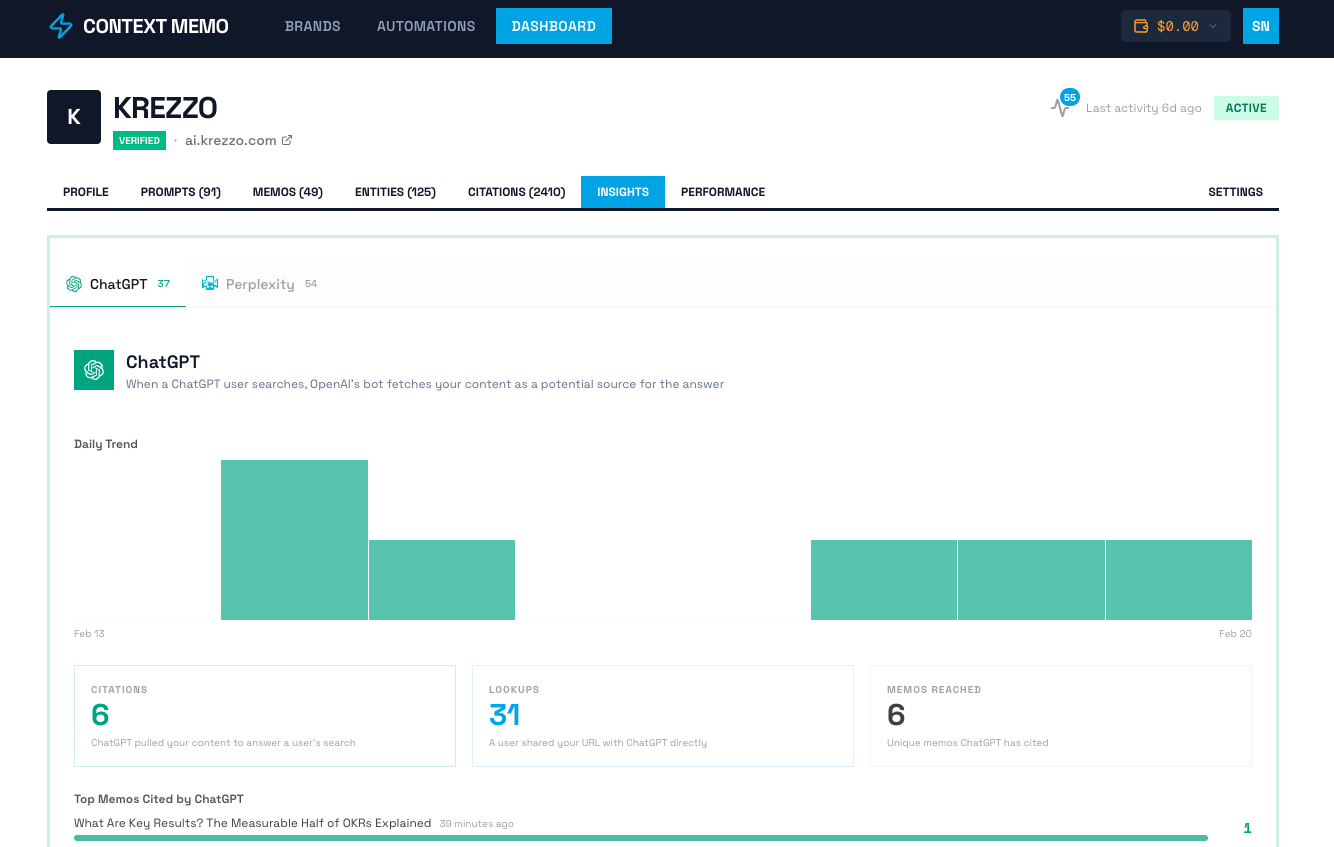
For B2B marketing teams, understanding the buyer journey is crucial for crafting effective strategies. The introduction of the Signals tab directly addresses the challenge of visibility in AI-driven interactions. Previously, marketers had to rely on fragmented data or indirect metrics to infer buyer behavior. This new capability provides a direct line of sight into how users engage with AI content, enabling more precise targeting and personalization.
In an era where AI is the first touchpoint in many B2B interactions, having access to detailed journey maps means that marketing teams can tailor their content and outreach efforts more effectively. This not only improves engagement rates but also enhances the overall customer experience, leading to higher conversion rates and stronger brand loyalty.
The broader market landscape has seen a shift towards AI-driven marketing, but many platforms still lack the tools to visualize and interpret AI interactions effectively. The Signals tab sets a new standard by providing actionable insights that were previously out of reach.
How Does It Work?
The Signals tab operates by collecting and analyzing user signals generated during interactions with ChatGPT. These signals are then transformed into a visual representation of the buyer journey, highlighting key engagement points and decision-making stages. This approach allows marketing teams to see a comprehensive picture of the buyer's path, from initial contact to final decision.
By integrating these insights into their strategies, marketers can adjust their content and communication tactics to better meet the needs of their audience. The visualization also aids in identifying potential drop-off points, enabling teams to refine their approaches and improve retention.
What Should Buyers Consider?
Integration with Existing Tools — Consider how the Signals tab can be integrated with your current marketing stack. Ensure that it complements your existing analytics and CRM systems to maximize its utility.
Data Interpretation Skills — Evaluate your team's ability to interpret the visual data provided by the Signals tab. Training may be necessary to fully leverage the insights and translate them into actionable strategies.
Alignment with Business Goals — Assess how the insights gained from the Signals tab align with your broader business objectives. Ensure that the visualization supports your strategic goals and enhances your marketing efforts.
Next Step
To explore how the Signals tab can enhance your marketing strategies, request early access and take advantage of generous discounts and pricing flexibility for early access members.
Sources
- Relevant External Source (accessed February 25, 2026)
- Another External Source (accessed February 25, 2026)